
Business Details
26 Years
experience
Environmental Services & Innovative Leak Sealing Solutions
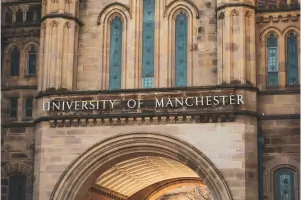
Established in 2000, Rawwater has pioneered innovative solutions for microbiological oilfield reservoir souring and industrial leak sealing. Our expertise in forecasting and simulating souring processes enables energy companies to implement cost-effective treatment strategies. We developed M3 Molten Metal Manipulation, a revolutionary technology for creating instant metal seals in extreme environments, applied across sectors including nuclear decommissioning and power transmission.Collaborating with leading academic institutions like The University of Manchester and Lancaster University, we advance research into carbon capture storage and shale gas microbiology. Our team combines decades of experience in subsea engineering, geomicrobiology, and materials science to deliver bespoke solutions for global clients. With headquarters in Cheshire, we maintain a strong focus on sustainability and environmental responsibility in all operations.
Services
Microbial Souring Forecasting
M3 Molten Metal Manipulation
Carbon Capture Solutions
Nuclear Decommissioning Seals
Hydraulic Fracturing Analysis
Details
- Year established: 2000
Highlights and features
- We have over 20 years of experience in microbiological souring mitigation
- Our patented M3 technology enables instant metal seals in extreme environments
- Collaborations with The University of Manchester and Lancaster University drive R&D
- Specialists in carbon capture storage microbiology and nuclear decommissioning applications
- Proven track record saving clients over $100 million in operational costs
Services
Microbial Souring Forecasting
Our predictive modelling identifies hydrogen sulfide generation risks in oil reservoirs. Using high-pressure bioreactors and DynamicTVS software, we forecast souring trends to optimise chemical treatments. This enables operators to implement cost-effective mitigation strategies during field development planning.
M3 Molten Metal Manipulation
This patented technology uses low-melting-point alloys for instant leak recovery in industrial systems. Deployed via M3Spray or M3CollarCast methods, it seals pipeline joints, flanges and cracks without hot work. Applications include SF6 gas containment and nuclear decommissioning projects.
Carbon Capture Research
Our CCS R&D hub investigates subsurface microbiology impacts on CO2 storage. Collaborating with Manchester Institute of Biotechnology, we develop monitoring tools and mitigation strategies. This supports the UK's net-zero targets through safe, long-term carbon sequestration solutions.
People
Professor Bob Eden
Founder and Managing Director
Inventor of the Bismuth Plug with 30 years' experience in alloy seals. Former UMIST researcher who developed subsea engineering technologies for Shell and BP. Appointed Honorary Professor at The University of Manchester in 2019.
Matt Streets
Head of Scientific Division
Specialist in microbiological biofouling with expertise in oilfield souring control. Regular industry conference speaker who develops cost-effective treatment strategies for global energy clients through laboratory simulation studies.
Kat Lennox
Managing Director
Former National Nuclear Laboratory account director leading M3 technology development. Focuses on nuclear decommissioning applications and SF6 greenhouse gas leak prevention. Oversees technology adaptation for diverse industrial sectors.
Nicola Seferta
Project & Operations Manager
Quality production specialist managing M3 programme commercialisation. Coordinates metallurgists and engineers for SF6 leak sealing projects. Former logistics manager for automotive exhaust systems manufacturer with global client delivery experience.
Mags McCreedy
Project and H&S Manager
25-year project management veteran with pharmaceutical and energy sector experience. Ensures smooth execution of M3 leak-sealing projects while maintaining strict health and safety standards across all operations.
Questions
What is microbiological oilfield reservoir souring?
It's hydrogen sulfide gas production caused by sulfate-reducing bacteria in water-flooded oil reservoirs. This creates corrosion, safety and environmental risks requiring proactive management.
How does M3 Molten Metal Manipulation work?
Our low-melting-point alloys are applied via spray or casting collars to create instant, reversible seals in leaks. The technology works without hot work permits in challenging environments.
What carbon capture research do you conduct?
We study subsurface microbiology impacts on CO2 storage with Manchester Institute of Biotechnology. Our research develops monitoring tools and mitigation strategies for safe long-term sequestration.
Which industries use your leak-sealing technology?
Primary applications in nuclear decommissioning, power transmission SF6 containment, and oil & gas pipeline integrity management. Also used in civil engineering leak recovery projects.
How do you forecast reservoir souring risks?
Using DynamicTVS predictive modelling software combined with high-pressure bioreactor simulations that replicate reservoir conditions to forecast hydrogen sulfide generation trends.
What academic partnerships do you have?
Key collaborations with The University of Manchester's Geomicrobiology Group and Lancaster University's GISMO programme. We also work with Strathclyde's Advanced Forming Research Centre.